
Skip to content
QMS Asset Integrity
Penetrant Testing (PT) services across Australia
arrow_back All Services NDT Services

Penetrant Testing (PT)

Liquid penetrant testing using solvent removable and water washable methods for surface defect detection on all metallic materials.

Overview

Penetrant Testing (PT), also known as Dye Penetrant Inspection (DPI) or Liquid Penetrant Inspection (LPI), is a versatile NDT method capable of detecting surface-breaking defects on virtually any non-porous material. QMS Asset Integrity is NATA-accredited for both solvent removable and water washable penetrant techniques.

PT is the method of choice for surface crack detection on non-ferromagnetic materials such as austenitic stainless steels, aluminium alloys, copper alloys, titanium and nickel alloys - where magnetic particle inspection cannot be used. It is equally effective on ferromagnetic materials and is widely applied across the marine, petrochemical, manufacturing and power generation sectors.

Our technicians deliver PT inspections at our workshop facilities and on client sites across Australia.

Penetrant Testing (PT) inspection work
In the field

Penetrant Testing (PT) Capability

Our technicians pair practical site experience with NATA-accredited processes, giving clients clear inspection data, traceable reporting and confidence in every result.

Methodology

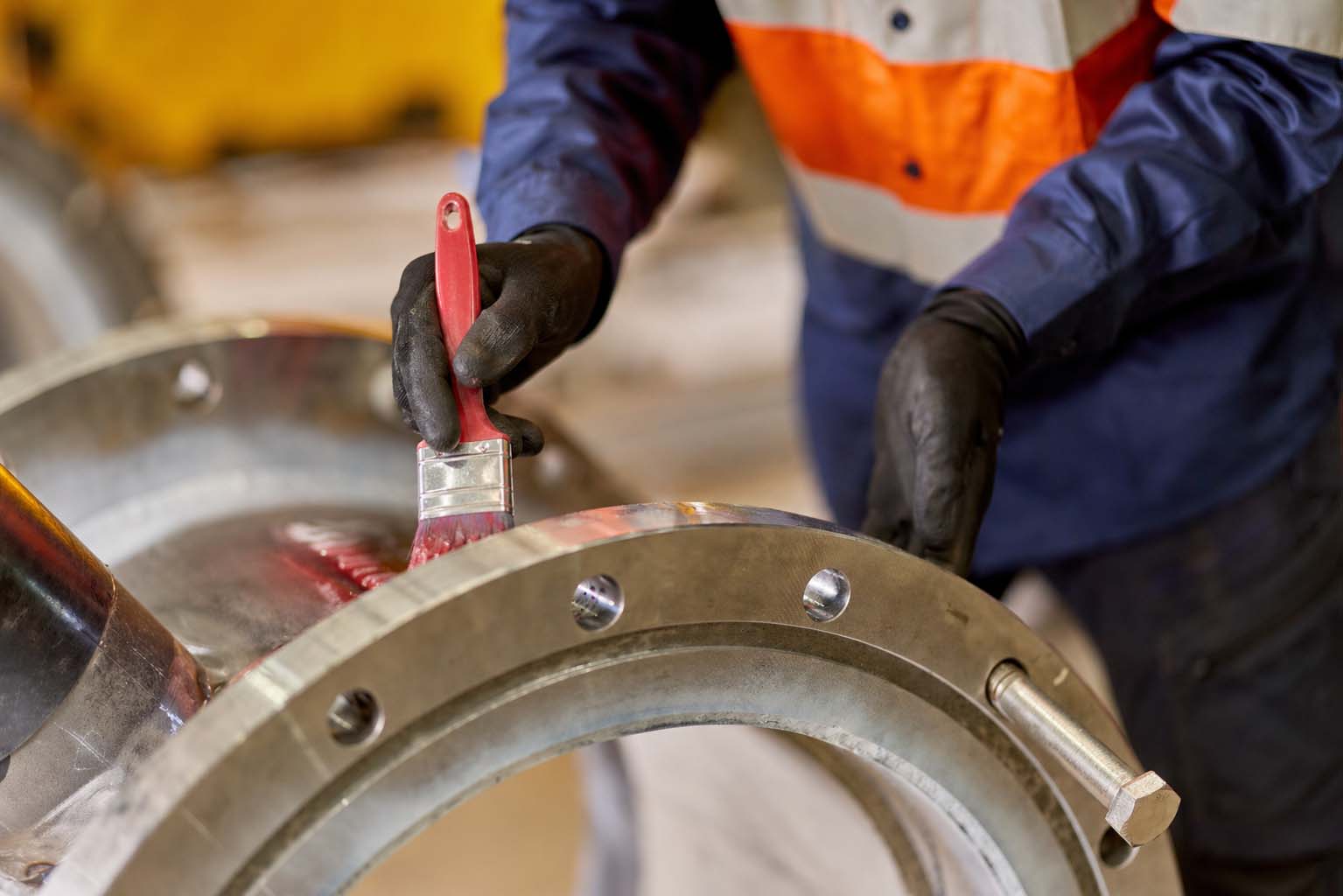
A liquid penetrant (visible red dye or fluorescent) is applied to a clean, prepared surface. Capillary action draws the penetrant into any surface-breaking discontinuities. After a controlled dwell time, excess penetrant is removed from the surface using the appropriate method - solvent wipe (Type II) or water wash (Type I).

A developer is then applied, which draws trapped penetrant back to the surface through reverse capillary action, creating visible indications that reveal the location, size and orientation of surface defects.

Advantages

check_circle Works on all non-porous materials - ferrous and non-ferrous
check_circle Highly sensitive to fine, tight surface-breaking cracks
check_circle Simple, low-cost technique with minimal equipment
check_circle No electricity or special power supply required
check_circle Immediate visual results
check_circle Portable for field and workshop use

Applications

  • arrow_right Non-ferromagnetic weld inspection (stainless steel, aluminium, titanium)
  • arrow_right Casting surface quality verification
  • arrow_right Fatigue and stress corrosion crack detection
  • arrow_right Fabrication quality control
  • arrow_right Maintenance inspection on process equipment

Applicable Standards & Codes

description AS 2062 - NDT - Penetrant testing
description ISO 3452 - NDT - Penetrant testing - General principles
description ASME V Article 6 - Liquid penetrant examination
description AS 3788 - Pressure equipment in-service inspection
description AWS D1.1 / D1.2 / D1.6 - Structural welding codes

NATA Accredited Scope

NATA
18957

NATA-accredited under ISO/IEC 17025:2017 (Accreditation No. 18957, Site 21253). Products: metallic surfaces. Determinant: defect detection and characterisation. Techniques: solvent removable, water washable.

View full scope of accreditation arrow_forward

Ready to Ensure Your Asset Integrity?

Partner with a NATA-accredited team delivering complete asset integrity - from inspection and testing through to remediation, coatings and certification.