
Skip to content
QMS Asset Integrity
Charpy Impact Testing services across Australia
arrow_back All Services Mechanical Testing

Charpy Impact Testing

Charpy V-notch impact testing to determine the notch toughness and ductile-to-brittle transition behaviour of metals, welds and heat-affected zones.

Overview

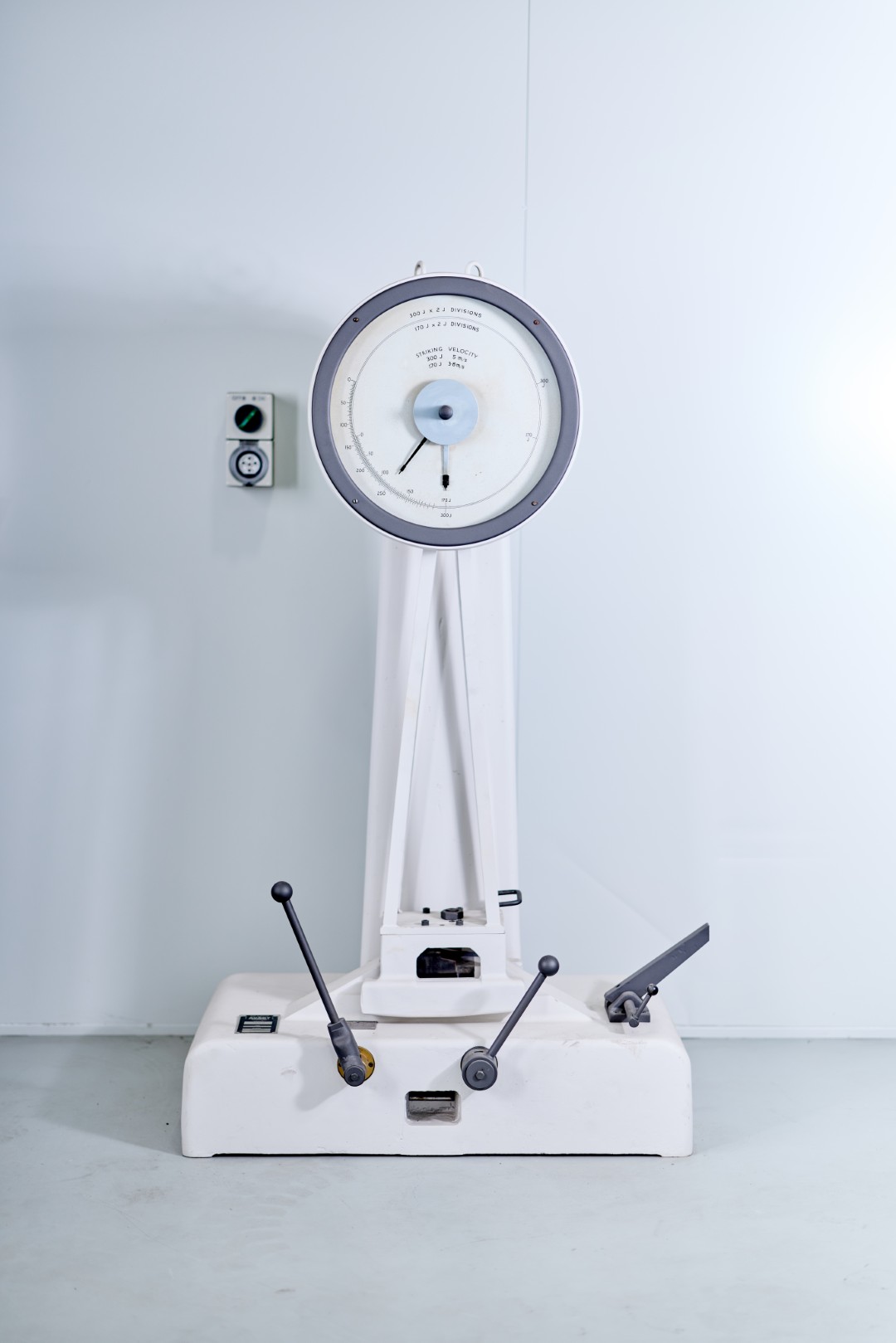
Charpy impact testing is a fundamental mechanical test that measures the energy absorbed by a standard notched specimen during fracture under a single high-strain-rate impact. The results quantify the notch toughness of the material - a critical property for assessing the risk of brittle fracture in structural steels, pressure equipment and welded fabrications.

QMS Asset Integrity performs Charpy V-notch impact testing at our mechanical testing laboratory, serving welding procedure qualification, welder qualification, material certification and production quality control requirements across the oil and gas, marine, mining, defence and manufacturing sectors.

Testing can be performed at ambient temperature or at specified sub-zero temperatures to characterise the ductile-to-brittle transition behaviour of ferritic steels - essential data for equipment operating in low-temperature or cryogenic service.

Charpy Impact Testing inspection work
In the field

Charpy Impact Testing Capability

Our technicians pair practical site experience with NATA-accredited processes, giving clients clear inspection data, traceable reporting and confidence in every result.

Methodology

A standard Charpy V-notch specimen (55 mm long, 10 mm square cross-section with a 2 mm deep 45-degree V-notch) is positioned on supports in the testing machine. A calibrated pendulum of known mass is released from a fixed height, striking the specimen on the face opposite the notch.

The energy absorbed during fracture is measured in Joules from the difference in pendulum height before and after impact. Three specimens are typically tested at each specified temperature and the results averaged. Additional data including percentage shear (crystallinity) and lateral expansion may be reported as required.

For transition curve work, sets of specimens are tested at multiple temperatures to map the energy absorption from the upper shelf (ductile) through the transition zone to the lower shelf (brittle).

Advantages

check_circle Quantifies material notch toughness for brittle fracture risk assessment
check_circle Sub-zero temperature testing capability for low-temperature service
check_circle Three-specimen averaging for statistically representative results
check_circle Essential for welding procedure and welder qualification
check_circle Fast turnaround with immediate energy absorption readout
check_circle Transition curve capability for full temperature characterisation

Applications

  • arrow_right Welding procedure qualification records (WPQR/PQR) impact requirements
  • arrow_right Material certification and incoming material verification
  • arrow_right Production test coupon assessment for pressure equipment
  • arrow_right Low-temperature and cryogenic service material qualification
  • arrow_right Weld metal and HAZ toughness characterisation
  • arrow_right Failure investigation and material assessment

Applicable Standards & Codes

description ASTM E23 - Standard test methods for notched bar impact testing of metallic materials
description AS 1544 - Methods for impact tests on metals
description ISO 148 - Metallic materials - Charpy pendulum impact test
description ASTM A370 - Standard test methods and definitions for mechanical testing of steel products
description ASME IX QW-170 - Notch toughness tests for weld procedure qualification
description AS 2205.7.1 - Methods of destructive testing of welds - Charpy V-notch impact test

NATA Accredited Scope

NATA
18957

Charpy impact testing is performed at our mechanical testing laboratory as part of our NATA-accredited scope under ISO/IEC 17025:2017 (Accreditation No. 18957).

View full scope of accreditation arrow_forward

Ready to Ensure Your Asset Integrity?

Partner with a NATA-accredited team delivering complete asset integrity - from inspection and testing through to remediation, coatings and certification.