
Skip to content
QMS Asset Integrity
Bend Testing services across Australia
arrow_back All Services Mechanical Testing

Bend Testing

Guided bend testing of weld specimens including root, face and side bends for welding procedure qualification and welder performance testing to Australian and international standards.

Overview

Guided bend testing is a fundamental destructive test used to assess the ductility and soundness of welded joints. Prepared weld specimens are bent through a specified angle (typically 180 degrees) in a guided bend jig, and the outer (tensile) surface is examined for cracks, lack of fusion or other discontinuities that exceed the applicable acceptance criteria.

QMS Asset Integrity performs guided bend testing at our Largs North mechanical testing laboratory, covering longitudinal bend, transverse guided bend, root bend, face bend and side bend configurations. Our scope covers an extensive range of Australian and international standards including AS/NZS 2205.3.1/.3.2/.3.3, ASME IX QW-160, ASTM E290, ASTM A370, ISO 5173, and AWS D1.1/D1.2/D1.6.

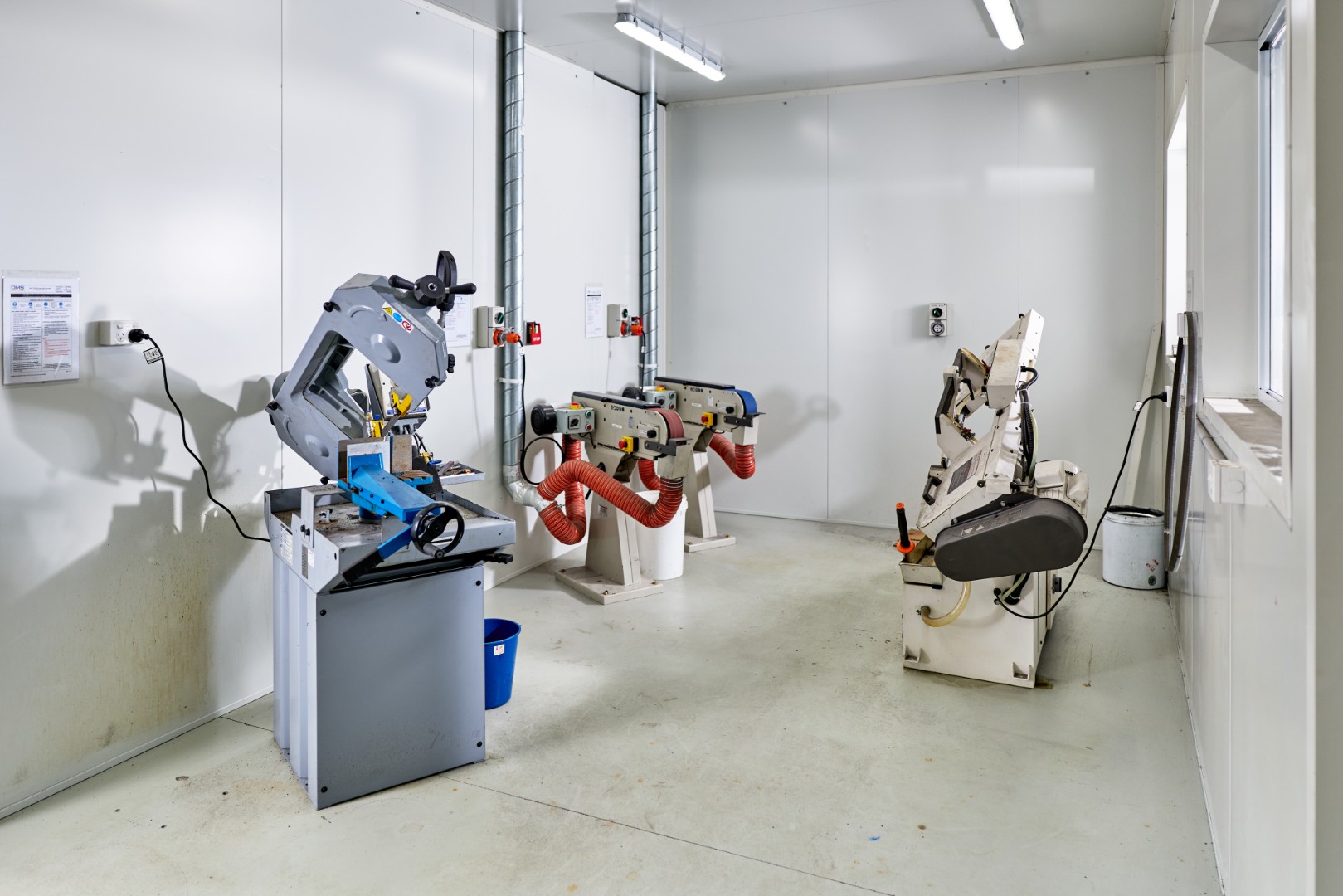
Bend Testing inspection work
In the field

Bend Testing Capability

Our technicians pair practical site experience with NATA-accredited processes, giving clients clear inspection data, traceable reporting and confidence in every result.

Methodology

A prepared weld specimen of specified dimensions is placed in a guided bend jig (former and plunger) with the surface to be tested in tension on the outer face. The plunger is advanced to bend the specimen through the required angle - typically 180 degrees for qualification tests.

The convex (tensile) surface of the bent specimen is examined for open discontinuities. Cracks, lack of fusion, or other defects exceeding the code-specified size limits (typically 3 mm in any direction) constitute a failure. Corner cracks resulting from the edge preparation are generally excluded unless they are clearly the result of inclusions, lack of fusion or other internal defects.

Test types: Root bend (root in tension), face bend (cap in tension), side bend (full thickness in tension) and longitudinal bend (specimen oriented parallel to the weld axis).

Advantages

check_circle Definitive pass/fail assessment of weld ductility and soundness
check_circle Tests actual weld performance under plastic deformation
check_circle Multiple configurations: root, face, side and longitudinal bends
check_circle Wide standard coverage: AS, ASME, ASTM, ISO, AWS
check_circle Essential for welding procedure and welder qualification

Applications

  • arrow_right Welding procedure qualification records (WPQR/PQR)
  • arrow_right Welder performance qualification testing
  • arrow_right Production test coupon assessment
  • arrow_right Weld overlay and cladding bend tests (AS/NZS 2205.3.3)
  • arrow_right Material ductility assessment (ASTM E290)

Applicable Standards & Codes

description AS/NZS 2205.3.1 - Transverse guided bend test
description AS/NZS 2205.3.2 - Longitudinal guided bend test
description AS/NZS 2205.3.3 - Guided bend test for weld-deposited surfacing
description ASME IX QW-160 - Guided bend tests
description ASTM E290 - Bend testing of material for ductility
description ASTM A370 Section 15 - Bend testing of steel products
description ISO 5173 - Destructive tests on welds - Bend tests
description AWS D1.1 / D1.2 / D1.6 - Structural welding code bend test requirements
description AS 3992 - Pressure equipment - Welding and brazing qualification

NATA Accredited Scope

NATA
18957

NATA-accredited under ISO/IEC 17025:2017 (Accreditation No. 18957, Site 26037). Longitudinal bend and transverse guided bend per AS/NZS 2205.3.1/.3.2/.3.3, ASME IX QW-160, ASTM E290, ASTM A370, ISO 5173, AWS D1.1/D1.2/D1.6. Including root, face and side bend. Including compliance with AS 3992.

View full scope of accreditation arrow_forward

Ready to Ensure Your Asset Integrity?

Partner with a NATA-accredited team delivering complete asset integrity - from inspection and testing through to remediation, coatings and certification.